
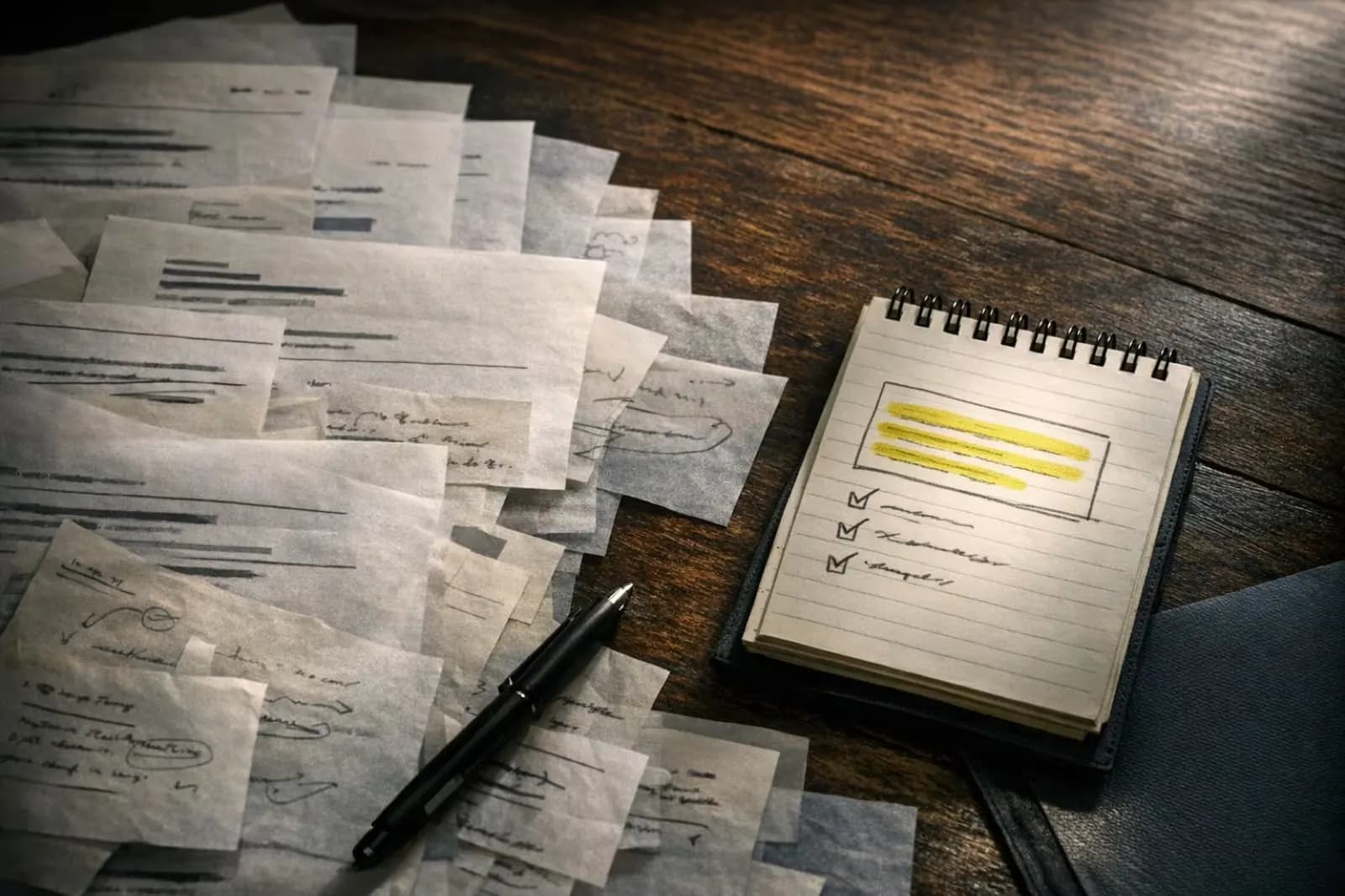
How to stop losing feedback in email threads
Email is very good at preserving conversation and very bad at preserving working context.
That distinction matters more than most people realize.
The typical failure is not dramatic. It looks like this:
- a client replies to an older thread with two new requests
- another stakeholder sends a screenshot separately
- somebody says "looks good" on a call, except for one change
- I come back to the project later and have to reconstruct what actually became real work
That reconstruction is the problem.
Email makes everything chronological
Client work is not chronological. It is contextual.
That is why feedback in email starts slipping once a project gets busy. The thread shows the order messages arrived, but that is not the same thing as showing:
- what changed
- what still matters
- what belongs together
- what has actually been approved
- who is waiting on whom
I have had plenty of moments where all the feedback was technically "there," but still not usable without another round of interpretation.
What losing feedback really means
Usually the client did send the note.
What gets lost is the shape of the work.
That is when you start doing the wrong version of the job:
- searching instead of shipping
- decoding instead of editing
- second-guessing instead of reviewing
And then the downstream problems show up:
- one request gets missed
- one thing gets redone unnecessarily
- one vague approval gets treated as final
- one extra change sneaks in because the thread is too messy to challenge cleanly
I have never found a clever trick that solves this. The fix is more boring than that.
The fix is a [client feedback tracking](/client-feedback-tracking) system where each request has its own place, status, comments, files, and approval record.
The fix that actually holds up
The only thing that has worked consistently for me is this:
Stop treating feedback as a thread. Start treating it as separate decisions.
That means:
- Split mixed feedback into separate issues.
- Keep follow-up comments on the right issue.
- Attach files and screenshots where they belong.
- Track the status of each item clearly.
- Ask for approval on the item itself, not the surrounding conversation.
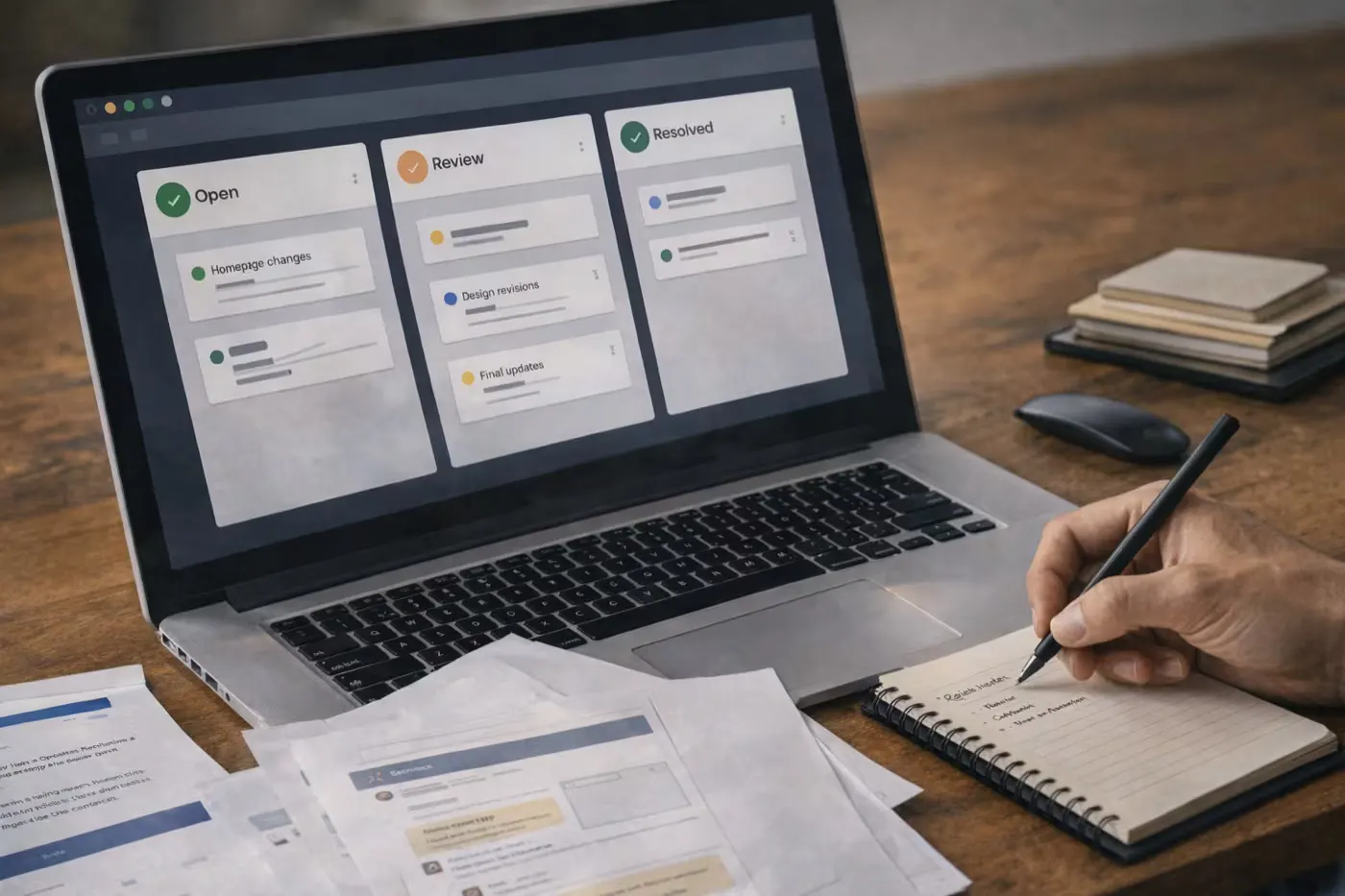
This is not glamorous. It just saves me from having to remember everything manually.
The low-friction version
I do not think clients need a complicated process here. They usually adapt just fine if the system is simple.
The version I come back to is:
- break mixed feedback apart
- name each request clearly
- track each one as open, in progress, ready for review, or resolved
- keep new comments attached to the right request
- ask for approval on that specific item
Once I started doing this consistently, the work became less mentally expensive.
The part nobody mentions enough
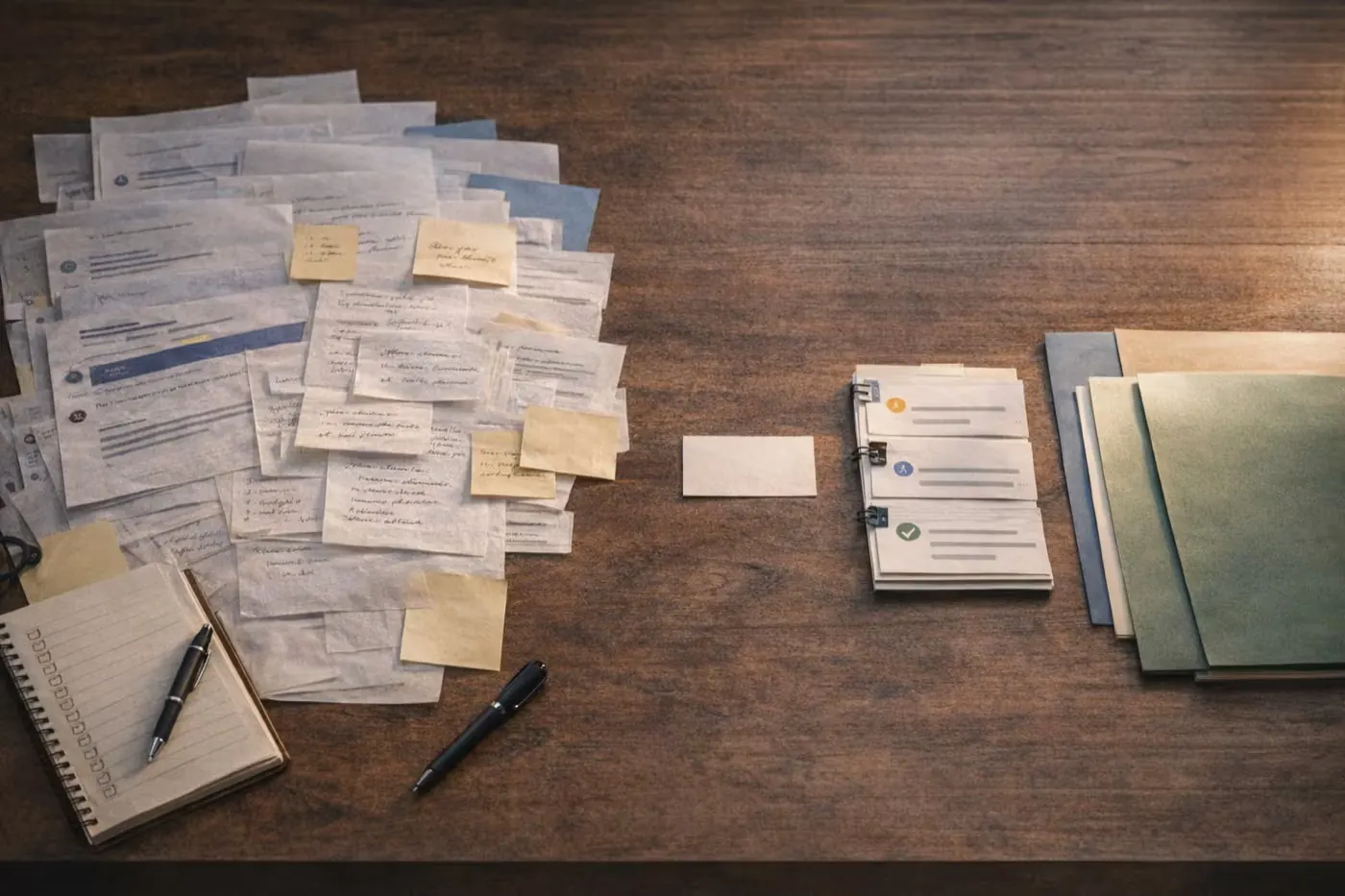
This is not just about missing notes. It is also about boundaries.
When feedback lives in email, scope goes soft around the edges. When feedback becomes tracked work, it gets much easier to say:
- this is already done
- this is still open
- this is a new request
- this belongs in the next round
That clarity helps with delivery, but it also helps with calm.
What I optimize for now
I no longer care very much where feedback starts.
It can arrive by email. Fine.
What I care about is where it lives once it becomes real work. If it stays trapped in the conversation that delivered it, I know I am going to pay for that later.
That is the shift behind IssueClear for me: not "stop clients from emailing," but "stop letting client work live permanently inside the thread that brought it in."